
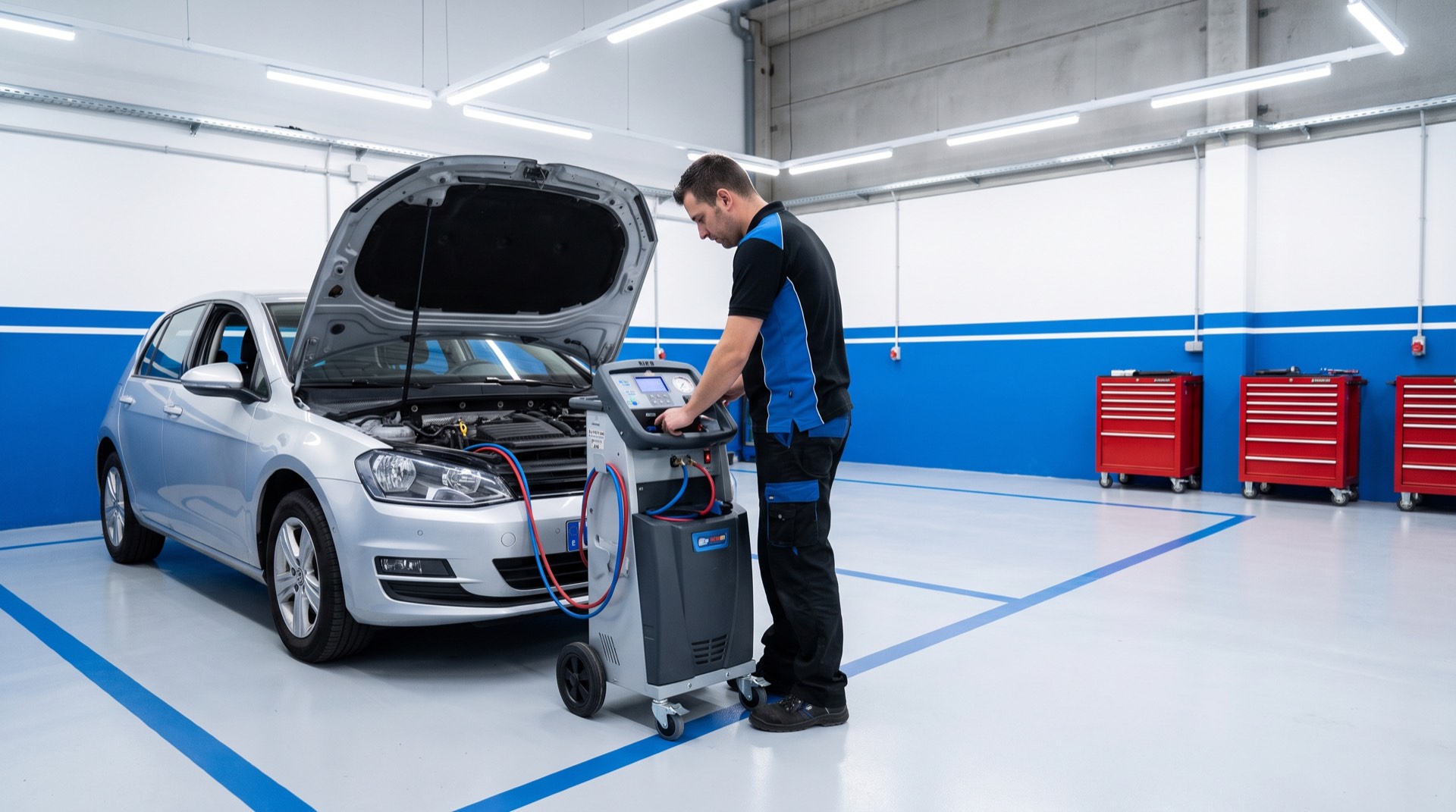
Air conditioning work we do
- Performance test — vent temperatures and system pressures measured
- Leak detection using dye and electronic sniffer testing
- Evacuate, vacuum test and recharge to the manufacturer's refrigerant weight
- R134a and newer R1234yf systems
- Compressor, condenser and evaporator replacement
- Receiver drier and expansion valve replacement
- O-rings, hoses and fittings that have perished
- Cabin pollen filter replacement
- Odour and mould treatment for systems that smell when first turned on
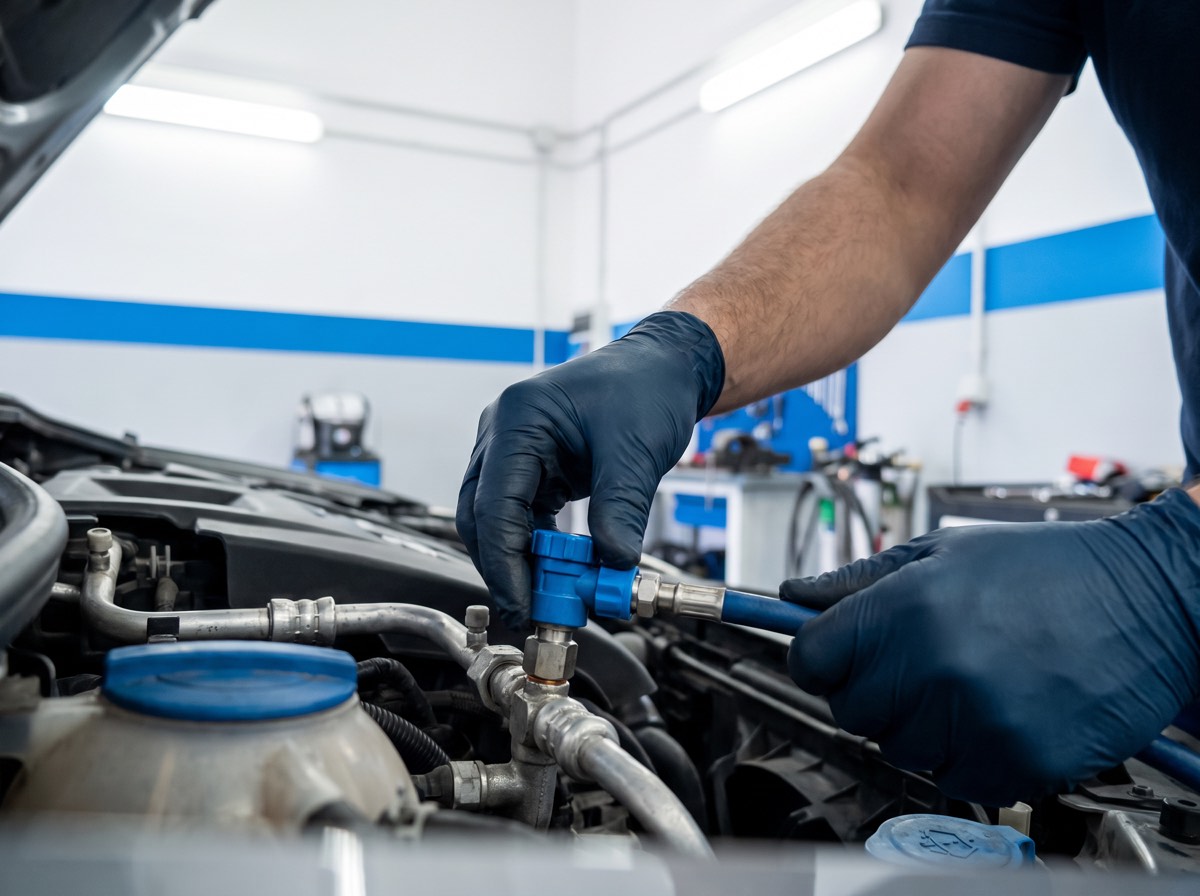
A regas on its own is not a repair
Air conditioning is a sealed system. If it has lost enough refrigerant to stop cooling, it has a leak — refrigerant does not get used up the way fuel does. Topping it up without finding the leak means you will be back next summer with the same problem, and you will have vented the gas to the atmosphere in the meantime.
We test for the leak first. Sometimes it is a perished O-ring worth very little; sometimes it is a condenser that has been hit by a stone. Either way you will know what you are paying for before we recharge it.
Why it is blowing warm
The common causes are low refrigerant from a leak, a failed compressor or its clutch, a blocked condenser, a faulty pressure switch or sensor, or a blend door or control fault where the system is working but the cold air is not reaching the vents. They need different repairs, so the test comes first.
Run it through winter
Air conditioning compressors need to circulate oil to keep their seals from drying out. Running the system for ten minutes every few weeks through the cold months keeps the seals healthy and is the cheapest maintenance there is. Most cars also run the compressor when you use the demister.
What it costs
A performance test and leak check is charged by time. Recharging depends on the refrigerant your car takes — R1234yf, used on most newer vehicles, costs considerably more per kilogram than the older R134a. We will tell you which one you have and quote before we start.